
Formal Impeachment Memorial
Create a formal memorial concerning a federal official, review it, and receive an email with a pdf version, a link that you may send to a member of the House, or both.
President and Vice President
Choose the federal official for whom you would like to create a memorial.


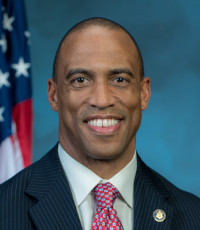
Executive Officers
Civil officers of the United States may be subject to impeachment.





















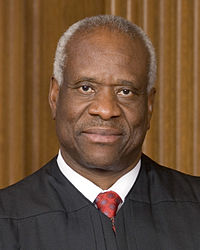
Supreme Court Justices
Justices of the United States Supreme Court may be subject to impeachment.








What Is a Formal Impeachment Memorial?

In 2006, we discovered that individual citizens have access to the impeachment process. We were researching methods available to initiate impeachment and found that the rules of the House of Representatives empower individual citizens to initiate the process.
The relevant part of the rules is a section called Jefferson’s Manual. It is the section that speaks to the ways impeachment can be initiated.
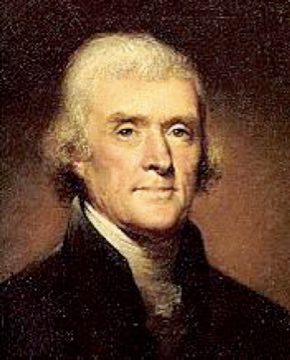
Before the House Judiciary Committee can put together the Articles of Impeachment — a set of charges against a public official — someone must initiate the impeachment process. Most often, this occurs when members of the House pass a resolution. Another method outlined in the manual, however, is for individual citizens to submit a memorial or petition for impeachment.
After learning this information, we found precedent in an 1826 memorial by Luke Edward Lawless, which helped initiate the impeachment of Federal Judge James H. Peck. We then used this as a template for our Formal Impeachment Memorial. Now any citizen can fill out this memorial and submit it, making it possible for Americans to do what their representatives are too often unwilling to do.
Common arguments against impeachment — and why accountability still matters
When and to Whom Will the Memorials Be Delivered?
After submitting your memorial, you will receive an email that includes a link to your memorial. The memorial is intended to be viewable by you and by whomever you share the link with.
You then have the option of contacting your congressperson and submitting the memorial to them. You can locate your representative through the House of Representatives and send them a message including the memorial link.
Each time someone delivers a memorial, the number of memorials can grow, and so can the impact. You can track the progress for any impeachable official on the main DIY page .
Tell Your Friends About This
Help others learn that citizens can create and send a Formal Impeachment Memorial. Share this tool with friends, family, or communities who may want to take action.


Research
Jefferson’s Manual
The relevant part of the House rules is a section called Jefferson’s Manual. It is the subsection of the rules of the House of Representatives that speaks to the ways impeachment can be initiated.
The manual is a guide to parliamentary procedure, originally written by Thomas Jefferson for the U.S. House, and is included, along with the Constitution, in the bound volumes of the Rules of the House of Representatives. It is ratified by each Congress and has been updated continuously through the history of our democracy.
Within the Manual itself, the section covering impeachment is designated Section LIII. Section 603 lists ways impeachment may be set in motion. The second listed method is the one of particular interest here.
Impeachment may be set in motion by:
- Charges made on the floor on the responsibility of a Member or Delegate;
- Charges preferred by a memorial, which is usually referred to a committee for examination;
- A resolution dropped in the hopper by a Member and referred to a committee;
- Charges transmitted from the legislature of a State or Territory;
- Charges transmitted from a grand jury; or
- Facts developed and reported by an investigating committee of the House.
Source: U.S. Government Printing Office ; Precedents: Hinds’ III, 2364, 2491, 2494, 2496, 2499, 2515; Cannon’s VI, 552.
While some of these words are no longer common in everyday speech, the important words are worth clarifying:
Memorial: a written statement of facts accompanying a petition presented to somebody in authority.
Preferred: to make a charge against somebody by submitting details of the alleged offense to a court, magistrate, or judge for examination, or to prosecute such a charge.
Source: Encarta World English Dictionary.
In other words, one method to initiate impeachment is for a citizen to write a statement, including charges against a power-abusing official, and submit it to somebody in authority — in this case, a representative of the House.
Peck and Contempt

Historical summary adapted from materials concerning Judge James H. Peck and congressional impeachment precedents.
This method — a Formal Impeachment Memorial, or petition — was used by a citizen to help initiate impeachment proceedings against a judge in the 1800s. The case involved Judge James H. Peck, an 1830–31 impeachment and acquittal.
President Monroe appointed Peck to the bench in 1822. In 1828, the Democrats swept to power, creating the conditions for partisan conflict. Peck was a judge in Missouri in a series of land claim cases in the territory of the Louisiana Purchase. The law was complicated, and the interests involved were large.
In the first such case, in 1825, Peck ruled against the client of a lawyer named Luke Edward Lawless. Because of the high degree of interest in the case, Peck published his ruling in a St. Louis newspaper in 1826. Shortly afterward, a detailed rebuttal of Peck’s ruling appeared in another newspaper under the byline “A Citizen.” Lawless’s authorship soon became known.
Peck was furious at the attack. He believed the rebuttal, in addition to its legal arguments, contained errors and misrepresentations of his ruling.
Peck held the letter to be a contempt of court, sentenced Lawless to twenty-four hours in jail, and suspended him from practicing in federal court for eighteen months.
Lawless felt he was entirely within his rights to criticize a published decision and saw the contempt ruling as a tyrannical affront to the Constitution. He began a long campaign against Peck that ultimately led to impeachment nearly five years later on one article dealing solely with the judge’s treatment of Lawless.
The article accused Peck of acting “to the great disparagement of public justice, the abuse of judicial authority, and to the subversion of the liberties of the people of the United States.” James Buchanan, who later became president, was chairman of the House managers.
Peck maintained that his contempt ruling was within his powers as a judge, and his defenders argued that even if it went too far, Peck did not act with bad intent. At a minimum, however, the conduct was serious enough to become the subject of impeachment proceedings.
Peck was acquitted with 21 votes in favor of removal and 22 against. But both the House and Senate demonstrated concern about the underlying issue by approving legislation, within a month of Peck’s acquittal, restricting contempt findings in federal courts.
The resulting legislation limited contempt to misconduct in or near the courtroom, misconduct in court business such as filings, or failure to obey a lawful court order. It could not be used simply to punish a newspaper rebuttal to a court’s decision.
Lawless’ actual memorial can be found here: Lawless Memorial . It is also discussed in the larger Report of the Trial of James H. Peck .
Additional historical material: More information on Peck’s impeachment .
Petitions, Memorials, and Private Bills
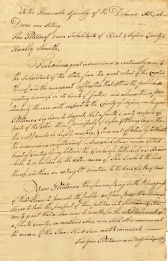
Do not let a representative in the House tell you that they cannot submit your impeachment memorial merely because they are from a district other than your own. The following House rule indicates that members may present petitions from people outside their own state.
[110th Congress House Rules Manual — House Document No. 108-241]
[From the U.S. Government Printing Office Online Database]
Petitions, memorials, and other papers addressed to the House may be presented by the Speaker as well as by a Member. Petitions from the country at large are presented by the Speaker in the manner prescribed by the rule. A Member may present a petition from the people of a State other than his own. The House itself may refer one portion of a petition to one committee and another portion to another committee, but ordinarily the reference of a petition does not come before the House itself. A committee may receive a petition only through the House.
Source: U.S. Government Printing Office .